📢 Disclosure: Some links on this page are affiliate links. As an Amazon Associate, I earn from qualifying purchases at no extra cost to you. Thanks for your support.
Exploring Nikon rangefinders, and is the COOLSHOT 20i GIII worth it?
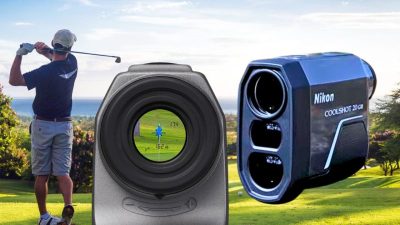
Nikon is well known for its high-quality cameras, but it also produces some of the best laser rangefinders on the market. With the release of the Nikon COOLSHOT 20i GIII in 2024, many are wondering how it stacks up against its predecessor, the COOLSHOT 20i GII.
Whether you’re a golfer, hunter, or outdoor enthusiast, choosing the right rangefinder can significantly enhance your accuracy and convenience. In this article, we’ll compare both models, highlight their differences, and help you decide if the GIII is worth the upgrade.
COOLSHOT 20i GII vs COOLSHOT 20i GIII: Quick comparison
| Feature | Nikon COOLSHOT 20i GII | Nikon COOLSHOT 20i GIII |
|---|---|---|
| Magnification | 6x | 6x |
| Range | 5–730 m | 5–730 m |
| Measurement Speed | Standard | Faster measurement response |
| Flag Lock Vibration | No | Yes (LOCKED ON QUAKE) |
| Incline/Decline ID | Yes | Yes |
| Build Quality | Lightweight, compact | Compact, updated design |
| Weatherproofing | Rainproof | Rainproof |
COOLSHOT 20i GII
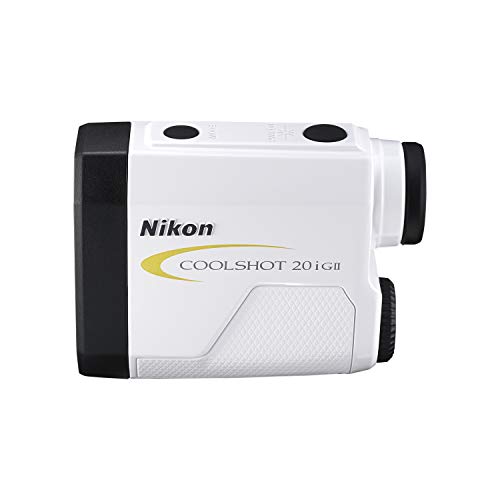
The COOLSHOT 20i GII has been a go-to budget rangefinder for many outdoor enthusiasts. With its 6x magnification and First Target Priority Mode, it can lock onto close-range objects with precision, making it a solid choice for golfers and shooters alike.
To the 20i GII’s advantage, it’s also quite affordable, making it accessible for budget-conscious users too. Especially after the release of the newer model. Its user-friendly interface allows even beginners to get accurate readings without too much hassle. And speaking of accuracy, this model has earned a solid reputation for being dependable and precise.
However, it’s not without drawbacks. While the range of 5 to 730 meters (6 to 800 yards) is the same as newer models, it lacks newer features like vibration confirmation (LOCKED ON QUAKE), which is becoming more common in modern rangefinders. Despite this, the COOLSHOT 20i GII remains a solid choice for those looking for a reliable yet straightforward device.
✅ Pros:
- Affordable & reliable – One of the best entry-level rangefinders.
- Lightweight & compact – Easy to carry around.
- Good accuracy – Provides consistent measurements.
- User-friendly interface – Simple to operate, even for beginners.
❌ Cons:
- No vibration feedback or advanced lock-on features, found in newer models.
While the COOLSHOT 20i GII is great for casual users, it lacks some of the advanced tech that newer models offer.
COOLSHOT 20i GIII


The COOLSHOT 20i GIII is an upgraded version that offers faster readings and improved user confirmation features like LOCKED ON QUAKE vibration. One of the biggest improvements is the faster measurement response and the LOCKED ON QUAKE vibration feedback, which make it easier to confirm the target quickly.
Let’s take a closer look at the Nikon COOLSHOT 20i GIII. It still offers the familiar 6 times optical magnification and measurement range, but with the improved ease of locking onto targets. The optics remain clear and bright, offering the same 6× monocular performance as the previous model. You get a measuring range from 5 to 730 meters (6–800 yards), and the build quality and rainproof construction is robust, so you can have durability even in more challenging outdoor conditions.
However, as expected, these improvements come at a higher price point. Some users may need a moment to get used to the new vibration alert and slope functions if they haven’t used them before, and as with most CR2-powered rangefinders, carrying a spare battery can be helpful for long rounds. Despite these potential drawbacks, the Nikon Coolshot 20i GIII stands out as an awesome high-performing rangefinder with advanced capabilities.
✅ Pros:
- Faster measurements – Thanks to its fast measurement system, readings are almost instant.
- Offers a measurement range of 6–800 yards, about 5–730 meters.
- Clear and bright 6× monocular optics.
- LOCKED ON QUAKE helps confirm the flag lock with a vibration alert.
- Improved durability – Feels sturdier and more ergonomic for long-term use.
❌ Cons:
- It is generally priced higher than the GII, depending on current sales and availability.
- Uses a CR2 battery, so carrying a spare can be useful for long usage.
- Some users may need time to get used to the vibration feedback and slope functions if they haven’t used them before.
If you want the latest features, better performance, and faster accuracy, the COOLSHOT 20i GIII is the superior choice so long as you don’t mind the increase in price.
Disclaimer: Product info, titles, and images may differ from descriptions due to updates. Always check the live listing for the most accurate information.
What About the Nikon COOLSHOT 20 GIII?
For golfers who don’t need slope-adjusted distances, Nikon offers another alternative: the COOLSHOT 20 GIII.
It’s a simpler alternative to the 20i GIII and 20i GII because it provides straight-line distances only, without slope-adjusted measurements. It shares the same core optics, 6× magnification, and ranging performance, but it doesn’t include ID Technology. In contrast, the COOLSHOT 20i GIII and 20i GII can calculate slope-adjusted distances for uphill and downhill shots. This is the main difference that separates the 20 GIII from the “i” models.
If you don’t need slope-adjusted distances, you can save by opting for the 20 GIII instead of the 20i GIII.
Other Alternatives to Consider
If you’re open to exploring other brands, here are some additional budget-friendly and premium alternatives:
Budget Options:
If you’re considering other options, there are several alternatives for best rangefinders to the Nikon Coolshot series that might catch your interest. For those on a budget, the Bushnell Tour V4 Shift and TecTecTec V PRO 500 are worth looking into.
The Tour V4 Shift offers solid performance with features like slope compensation at a more affordable price. The V PRO 500 is another budget-friendly rangefinder that provides decent accuracy and ease of use, making it a great entry-level choice.
High-End Options:
For those willing to spend more for premium features, you might want to check out the Leupold GX 5 i3 or the Bushnell Pro XE. The Leupold GX 5 i3 comes packed with advanced features like True Golf Range and Club Selector, which can significantly enhance your game. The Bushnell Pro XE, on the other hand, offers exceptional clarity and range, along with built-in elements like temperature and barometric pressure sensors for ultra-precise readings.
Overall
The main Nikon COOLSHOT rangefinders covered in our article offer great performance, but the 20i GIII’s faster readings and vibration-assisted flag confirmation make it the better choice for users who want more precision.
- For a more affordable option: COOLSHOT 20i GII
- For faster readings and vibration-assisted confirmation: COOLSHOT 20i GIII
- Or for a simpler, no-slope alternative: COOLSHOT 20 GIII
Your final choice really depends on your budget and whether you need fast measurement and vibration feedback features, or slope-adjusted distances.
We hope this article on the best Nikon rangefinders helped you. Oh, and by the way, if you’re on the lookout for a new laptop, make sure to try our Laptop Finder Quiz. Otherwise, check out our similar tech reviews on the links below.

As one of the site’s writers, A. Moody covers laptops, home tech, and connected devices. His reviews and guides focus on real-world performance and practical insights to help readers make informed tech choices.
Last update on 2026-03-13 / Affiliate links / Images from Amazon Product Advertising API