📢 Disclosure: Some links on this page are affiliate links. As an Amazon Associate, I earn from qualifying purchases at no extra cost to you. Thanks for your support.
The Meta Quest 3 has been my go-to VR headset ever since I picked it up over two years ago. As the VR industry progresses, we are seeing incredible innovations among the most popular VR headsets on the market. Naturally, with 2026 rolling on and the Quest 3 showing its age, the VR community is getting restless. Are we getting a Meta Quest 4 soon?
To answer that, we have spent a lot of time digging through the latest industry leaks, parsing through Meta’s official updates, and scouring VR communities on Reddit to see what people are actually demanding. Here is everything we know about the Meta Quest 4 release date, specs, the upcoming rivals, and why the future of spatial computing might not be a bulky headset at all.
Do we need a Quest 4 right now?
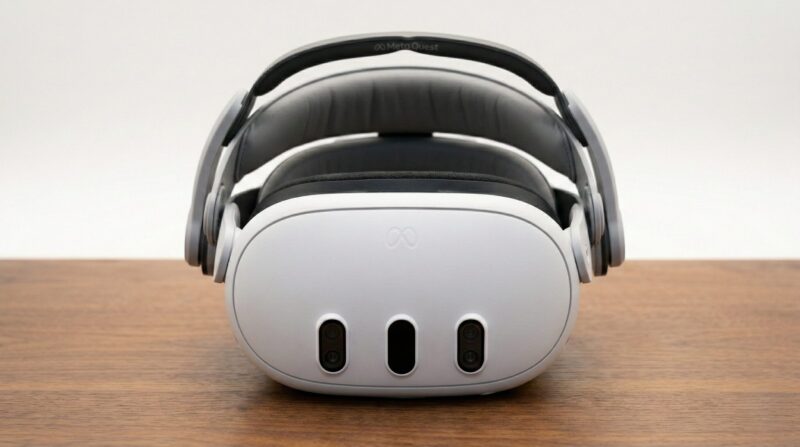
To understand what the Quest 4 needs to be, we have to look at the flaws of the current generation. While my Meta Quest 3 review after 1 year (which now reflects two full years of heavy use) highlights the incredible clarity of the pancake lenses and its amazing utility as a fitness device, living with the headset has exposed some glaring issues.
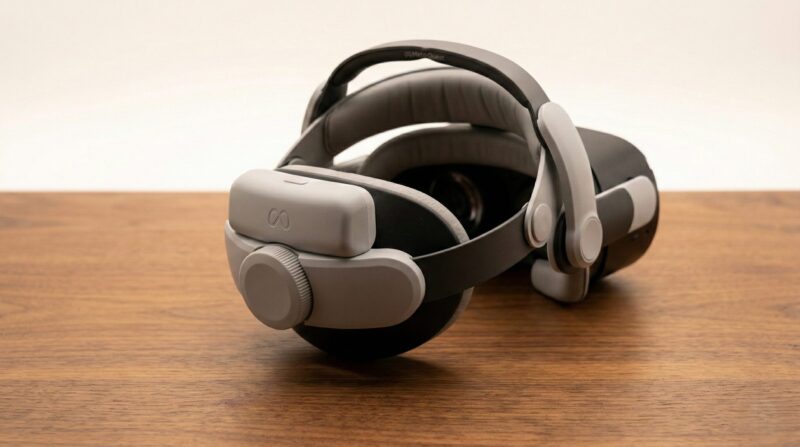
- The “Brick” Form Factor: The Quest 3 weighs over 500 grams, and all that weight sits on your face. After two years, I can say the standard strap is one that most people find uncomfortable for long sessions, especially with sports. I immediately had to upgrade to a BOBO VR headstrap (check out my guide to the best Quest 3 accessories) just to balance the weight and stop the headset from causing neck strain and disorientation.
- Battery and Heat: When playing intense fitness games like Thrill of the Fight II, the battery dies in roughly 1 to 1.5 hours, and the headset can generate uncomfortable heat around the eyes.
- App Store Quality Control: I’ve wasted money on glitchy, unplayable titles – like a table tennis game that was too broken to even finish a match. The app ecosystem currently feels cluttered with buggy tech demos.
These friction points are exactly what the VR community is vocalizing online, and Meta is finally listening.
Meta Quest 4 Release Date
Historically, Meta operates on a three-year hardware cycle, which pointed perfectly to a Fall 2026 release for the Quest 4. However, the landscape has completely shifted.
Recent supply chain leaks reveal that Meta actually canceled their immediate 2026 prototypes for the Quest 4 (internally codenamed “Pismo Low” and “Pismo High”). Instead of releasing a minor upgrade, Meta wants the next generation to be a massive technological leap. As a result, the true gaming-focused Meta Quest 4 has reportedly been pushed back to late 2027 or even 2028.
On top of that, the era of the affordable, heavily subsidized headset might be ending. Internal memos suggest the Quest 4 will carry a higher premium price tag to help Meta’s Reality Labs division achieve profitability.
What the VR Community Actually Wants
When scouring Reddit communities like r/OculusQuest and r/virtualreality, enthusiast demands line up perfectly with my own gripes. Based on community wishlists, here is what the Quest 4 needs to succeed:
- Eye Tracking is Mandatory: Across Reddit, the number one requested feature is eye tracking. This unlocks “Dynamic Foveated Rendering,” meaning the headset only renders the exact spot you are looking at in ultra-high resolution, saving massive amounts of processing power and drastically extending battery life.
- The Return of OLED: The pancake lenses on the Quest 3 are sharp, but the LCD panels mean your “blacks” often look like washed-out dark grays. Users are begging Meta to include Micro-OLED or advanced Quantum Dot LCD panels in the Quest 4 for true, immersive contrast.
- Wider Field of View (FOV): Many users are tired of the “scuba mask” tunnel effect and are hoping for a wider FOV to eliminate the black borders around their peripheral vision.
- A Better App Ecosystem: To address the glitchy store experiences I mentioned earlier, Meta is making a major software pivot in 2026. Meta announced they are shifting their social “Horizon Worlds” metaverse primarily to mobile devices. This allows the VR platform to focus entirely on supporting high-quality, third-party gaming developers and fixing store discoverability.
The 2026 Solution: The “Puffin” Headset
If the Quest 4 is delayed, what is Meta doing in 2026? They’re directly addressing the “brick on your face” problem.
Meta is heavily rumored to be prioritizing an ultra-lightweight mixed reality headset (codenamed “Puffin” or “Phoenix”) for late 2026 or early 2027. Instead of strapping a heavy battery and processor to your face, the Puffin offloads the compute hardware into an external puck that fits in your pocket. This drops the headset weight to under 110 grams which is roughly the weight of a thick pair of eyeglasses or a smartphone. For fitness enthusiasts and productivity users, this could be the ultimate solution.
The Rivals: Valve and Samsung Enter the Ring
Meta’s delay leaves a massive hardware gap, and rivals are swooping in to capture the market:
- Samsung Galaxy XR: Built on Google’s new Android XR platform, this premiumly priced headset aims to bridge the gap between Meta and Apple. It boasts dual 4K Micro-OLED displays with a massive 29 million pixels, a more powerful Snapdragon XR2+ Gen 2 chip, and built-in Gemini AI.
- Valve Steam Frame: Coming in 2026, Valve is tackling the exact ergonomic issues I experienced. The Steam Frame mounts its rechargeable battery entirely on the back of the headstrap, perfectly balancing its weight of around 440 grams. It also features a dedicated Wi-Fi 6E/7 dongle for flawless, wireless PCVR streaming directly from your computer.
The Paradigm Shift: From Bulky VR to AR Smart Glasses
Here is my personal take on the industry: the primary focus is shifting away from bulky, enclosed VR entirely. The trend heavily favors devices that people can naturally wear everyday. I get the impression that enclosed VR is becoming a market for niche gaming buyers, while XR and AR smart glasses are the true future of the medium.
The massive commercial success of the Ray-Ban Meta smart glasses proves this; they sold millions of units simply because they are unobtrusive, fashionable, and useful in daily life. This is moving the industry much closer to the lightweight wearable form factor I covered in my rokid max AR glasses review.
Meta recognizes this shift and is currently expanding their AR glasses roadmap. At Connect 2024, they revealed “Orion,” a 100-gram prototype pair of holographic AR glasses with a massive 70-degree field of view. While Orion is currently a $10,000 developer kit, Meta plans to release a consumer-ready version (reportedly codenamed “Artemis”) in 2027. Once the technology allows for better, smaller devices for people to wear naturally, smart glasses will completely dominate spatial computing.
So, should you wait?
Absolutely not. If you are holding out for the Meta Quest 4, you could be waiting until at least late 2027, and you’ll likely pay a massive premium when it drops.
Despite its battery life limits and the mandatory need for aftermarket headstraps, the Meta Quest 3 has survived two years of my heavy use and is still a powerhouse today. Yes, it’s far from perfect, but it does remain one of the best headsets on the market thanks to its price and massive game library. If you’re still on the fence about jumping into VR or upgrading an older headset, check out my Oculus Quest 2 vs Quest 3 review to see which one is better for you!
Thanks for reading our Meta Quest 4 breakdown! We hope this article helped you. Check out our other related articles on the links below.

Combining a BSc in Computing and Business with a passion for digital productivity, Eamon A. has spent the last three years reviewing the latest tech innovations. From high-performance laptops to essential home office accessories, his in-depth comparisons focus on design and functionality, ensuring readers find the perfect tools for their setup.