📢 Disclosure: Some links on this page are affiliate links. As an Amazon Associate, I earn from qualifying purchases at no extra cost to you. Thanks for your support.
Valve has officially ended production of the Steam Deck LCD, closing the book on the original version of its handheld PC. With remaining stock now running low in major markets, the Steam Deck lineup has shifted entirely to OLED models for the time being. Which marks a small but meaningful change in Valve’s hardware strategy and in the affordability of PC gaming on the go.
Unlike most hardware discontinuations, the decision wasn’t announced with a press release or blog post. Instead, Valve confirmed the move through a brief notice on the Steam Deck’s official store page in mid-December 2025. With a very simple message below the products themselves, Valve stated: “We are no longer producing the Steam Deck LCD 256GB model. Once sold out, it will no longer be available.” [Source: Official Steam Deck Store]

So, that means going forward, Valve will still be selling the 512GB and 1TB OLED models. If you thought Valve produced LCD models with 64 GB and 512 GB, you weren’t imagining it. Right now, only the 256 GB LCD Steam Deck has been officially discontinued, not the 512 GB LCD. Earlier in the lifespan of the original Steam Deck, Valve had shipped multiple LCD variants: 64 GB, 256 GB, and 512 GB, when the device launched and during 2022-2023.
But when the OLED Steam Deck launched in late 2023, Valve gradually phased out the older LCD models. So the 64 GB and 512 GB LCD versions were discontinued back then as their inventory ran out, leaving only the 256 GB LCD as the last LCD option available for new buyers for a while. Find out what the Steam Deck is really like to play on.
Low-Key Announcement
The understated way Valve handled the announcement surprised some observers, but is really expected from the company’s long-standing communication habits. Rather than proactively briefing the press, Valve let the store page update speak for itself. Gaming outlets on the web independently noticed the change and reported on it, providing more awareness.
After coverage began circulating, Valve contacted several publications but still haven’t provided an official reason for the decision. That silence has left analysts and consumers piecing together the rationale based on market conditions, manufacturing realities, and Valve’s recent product history. But several factors are likely contributed to the decision.
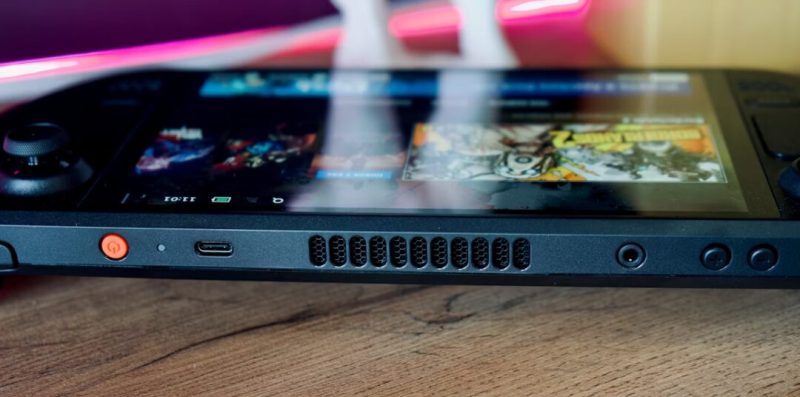
Challenges in the market
Rising Component Costs
One of the most significant pressures facing hardware manufacturers today is the escalating cost of memory and storage components. The global surge in AI development has driven unprecedented demand for DRAM and NAND flash, pushing prices upward across the semiconductor market. For a device like the Steam Deck LCD, anchored to its mid-priced value, those increases can quickly erode already-thin margins.
Raising the price of the LCD model would have undercut its role as an affordable gateway into PC gaming, leaving Valve with few viable options other than discontinuation.
Simplifying Manufacturing
Maintaining both LCD and OLED versions of the Steam Deck requires parallel supply chains, distinct assembly processes, and additional quality-control overhead. As the OLED model increasingly became the preferred choice among new buyers, continuing to support two hardware tracks likely made less economic sense. Consolidating production around a single OLED platform reduces complexity and operating costs at a time when component availability remains volatile.
Declining Demand for Older Hardware
While the original Steam Deck sold millions of units, the feature gap between the LCD and OLED models grew difficult to ignore. The OLED version offers a higher refresh rate display, improved battery capacity, newer Wi-Fi standards, and better overall efficiency. As those differences became more apparent, demand for the LCD model appears to have softened, making ongoing production harder to justify.
There’s also alot of competition from Asus with the ROG Ally, Lenovo with its Legion Go, and Nintendo with the Switch 2. Not to mention newer handheld PC’s producing tech with more power and upgraded hardware.
A Natural End to the Product Lifecycle
The 256GB LCD was the last remaining variant of the original lineup. Valve had already phased out the 64GB and 512GB LCD models in 2023, suggesting a deliberate, multi-year transition away from the first-generation hardware rather than an abrupt course correction. So, that way it makes sense to more forward wth the OLED models to compete in a market with tech that has upgraded hardware.
The Immediate Impact
When the LCD Steam Deck is gone, the cost of entry into Valve’s handheld ecosystem will rise quite sharply. The lowest-priced new model is the 512GB OLED version, which costs considerably more, followed by the 1TB OLED at an even higher price. That represents a nearly 38 percent increase from the former 256GB LCD starting point.
For budget-conscious buyers, this shift may slow adoption in the short term. But having said that, refurbished LCD units and second-hand devices are likely to remain available at lower prices, which you should be able to pick up at your game store or a site like eBay. But they no longer represent a long-term, first-party option.
The good news is that existing LCD owners aren’t being left behind. Valve has confirmed that software support will continue across both LCD and OLED models, with ongoing SteamOS updates, performance improvements, and compatibility fixes. With an installed base estimated at several million devices, maintaining parity remains in Valve’s best interest.
Still no Steam Deck 2?
The end of the LCD model has inevitably fueled speculation about a successor, but Valve has been clear that a Steam Deck 2 is not imminent. According to Steam Deck hardware designer Lawrence Yang, the company is not interested in incremental upgrades that deliver modest performance gains at the expense of battery life or portability.
Instead, Valve is waiting for what it considers a true generational leap, new silicon capable of delivering significantly higher performance without compromising efficiency. So with that in mind, current projections place a next-generation Steam Deck somewhere between 2026 and 2028, with some credible sources leaning toward the latter end of that window.
While details remain speculative, industry chatter suggests future hardware could feature more advanced AMD architectures, improved thermals, longer battery life, and modern quality-of-life upgrades such as variable refresh rate support and Hall effect joysticks. Pricing, however, is unlikely to return to the original Steam Deck’s aggressive entry point.
And with their focus on the Valve Frame, I imagine they would also provide better integration with their VR headset, perhaps for a more seamless experience into VR gaming, but that is speculative.
A Broader Hardware and Ecosystem Play
The LCD’s discontinuation also fits into a larger strategic picture. Valve is simultaneously working on multiple hardware initiatives beyond handhelds, including a new first-party Steam Machine, an enhanced TV-focused dock and display system, and an updated Steam Controller. Rather than relying on a single device, Valve appears to be positioning SteamOS and the Steam platform as a flexible ecosystem that spans form factors.
That philosophy extends to third-party hardware as well. Valve has begun collaborating with other handheld manufacturers to support SteamOS on competing devices, signaling a shift away from strict hardware exclusivity. In this model, the hardware matters, but the platform matters more.
Cloud gaming is another game changer currently playing a role in the gaming markets. That’s because cloud gaming platforms reduce the need for powerful local hardware by shifting performance demands to remote servers, which aligns closely with Valve’s long-standing emphasis on efficiency, battery life, and broad hardware compatibility.
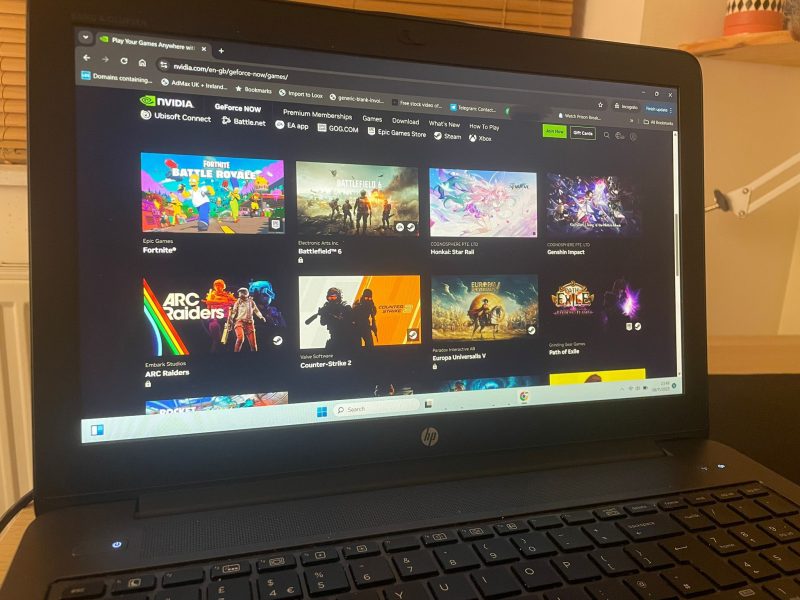
If cloud streaming continues to mature, especially in latency, image quality, and offline caching, it strengthens Valve’s incentive to prioritize display quality, controls, thermals, and battery longevity over raw compute power in future Steam Deck designs. Rather than racing competitors on specs, Valve could lean further into a hybrid model where local play handles indie and older titles, while demanding AAA games are streamed via third-party services.
This also reinforces Valve’s ecosystem-first strategy: as long as users stay within SteamOS and the Steam storefront, Valve benefits regardless of whether the game is rendered locally or in the cloud. In that sense, services like GeForce Now don’t undermine Valve’s hardware ambitions; they potentially justify Valve’s patience in waiting for a true generational leap instead of chasing incremental silicon upgrades.
From my experience using Geforce now, I can see how it definitely makes gaming more accessible. Streaming games is almost like streaming videos on YouTube, and you can now focus on getting a device with a good display rather than expensive high performing thermals and GPU’s.
What the End of the LCD Steam Deck Really Means
The retirement of the Steam Deck LCD marks the end of an era for affordable handheld PC gaming. The original model proved that a competitively priced device could deliver a credible, console-like PC experience, and it reshaped expectations for portable gaming hardware.
We think its disappearance doesn’t signal retreat, but refinement. Valve is doubling down on higher-end hardware, patient iteration, and ecosystem expansion rather than chasing rapid refresh cycles. And as cloud-based services like GeForce Now continue to mature, the pressure to push for more powerful local hardware may lessen, reinforcing Valve’s focus on efficiency, display quality, and user experience over raw specifications.
For consumers, we hope that this approach would mean better, more balanced devices over time, but we know it could also mean fewer entry-level bargains. For now, the Steam Deck’s future is OLED-only, and Valve seems content to let the rest of the industry pursue annual upgrades while it waits for the next genuine leap forward, whether that progress comes from silicon, software, or the cloud.
We hope you enjoyed this article, make sure to read our similar articles below for more.

Combining a BSc in Computing and Business with a passion for digital productivity, Eamon A. has spent the last three years reviewing the latest tech innovations. From high-performance laptops to essential home office accessories, his in-depth comparisons focus on design and functionality, ensuring readers find the perfect tools for their setup.